Elizabethan hair
The Elizabethans always made an effort with their hair and always incorporated fine detail into their designs. The ideal Elizabethan women was fair hair with a light skin complexion, as a result women began dying their hair using substances such as saffron and urine. The fair an Elizabethans hair was the wealthier they were portrayed as.
Queen Elizabeth was considered as a role model for the Elizabethan women therefore elements the queen would consider fashionable such as wearing wigs for example then became popular with the Elizabethan women. Wigs became popular with women for around the last quarter of the 16th century, Queen Elizabeth was known to have approximately over 80 different wigs, due to the amount of hair colorant women would put on their hair it would slowly begin to fall out, this is also another reason as to why wigs began popular for Elizabethan women to wear. Elizabethan women also began to frizz their hair, this was another fashion followed by the queen
.
Isaac Oliver. (c.1600). The rainbow portrait . Available: http://www.andrewgrahamdixon.com/archive/readArticle/245. Last accessed 30/11/14
 Isaac Oliver. (c.1600). The rainbow portrait . Available: http://www.andrewgrahamdixon.com/archive/read Article/245. Last accessed 30/11/14
The Rainbow portrait 1600 highlights the use of the frizzing technique which became very popular with the Elizabethan women.
Elizabethan women's hair was mainly styled in a bun or plaited . Women's hair was also pulled back off their faces to highlight their foreheads, in Elizabethan times foreheads being uncovered was considered a sign of intelligence the front of an Elizabethans hair either rounded or heart shaped. Women's hairstyles were usually set in a centre parting and completed with a head piece such as a coif or and affiant. Women who belonged in the court, their hair was usually styled as a straight centre parting with a French hood to complete the look and cover majority of the hair. Women also liked to incorporate materials into their headgear and hairstyles such as ribbons and feathers, Elizabethan women who were wealthy tended to incorporate jewels and pearls into the styles. The first hair pin which was designed in 1545 became very popular with the Elizabethan women, they would use these in order to pin and secure their hair in place.
Anonymous. (unknown). Elizabethan hairstyles . Available: http://www.elizabethanenglandlife.com/elizabethan-hairstyles.html. Last accessed 27/10/14.
Liz Gogerly (10/02/2011). Tudor life-clothes. England: way land publishers LTD.
"The Elizabethans made a statement about their hats as well as their hairstyles wealthy women wore hoods and veils covering their heads and towards the end of the 16th century they would then begin wearing taller hats and woollen caps, in summer times straw hats with wide brims became popular"
Men in the Elizabethan times were also known for spending a significant amount of time in the mirror. At the beginning of the era men's hair started of short and cropped and slowly longer hair became popular, they began adding curling into their hair using curling irons which would then be secured in place using gum or wax. Elizabethan men's pride was also their bears which would be a variety of different shapes and lengths such as rounded or squared. During the early era majority of men had longer hair and were clean shaven however Henry VIII made beards become popular in fashion with Elizabethan men, after 1550 men overall became more neat and tidy beards moustaches and hair was trimmed shorter or shaven.
Anonymous. (unknown). Elizabethan hairstyles . Available: http://www.elizabethanenglandlife.com/elizabethan-hairstyles.html. Last accessed 27/10/14.
anonymous. (1536). portraits of king henry the VIII. Available: http://www.luminarium.org/renlit/henry8face3.htm. Last accessed 27/10/14.
The portrait of Henry the VIII highlights a prominent rounded beard and a fur brimmed hat sloped to the side. Henry VIII was the main reason as to why beards became fashionable with the Elizabethan men.
Hats and headgear were also generally important to Elizabethan men.in the 1550s men wore flat hats such as a toque or a velvet beret sloped to one side. hats were also considered a sign of importance, men who were wealthy or had some significance wore tall crown hats. a rich colour or red was a popular colour of hat for men to wear . Elizabethans wore their hats indoors and outdoors particularly the flat caps.
(source- a fashionable history of hats and headgear- Helen Reynolds)
Elizabethan headgear
Coif
The coif was a type of Elizabethan headgear which was used to cover the Elizabethan hair. The coif was a plain white linen close fitted cap which was tied under the chin which all children wore as well as all classes of women . some coifs included embroidery.
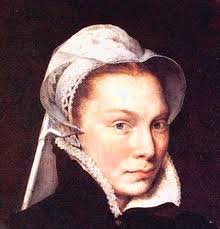 anonymous. (155-1560). white Flemish caps. Available: http://web.comhem.se/~u31138198/whitecap.html. Last accessed 27/10/14.
The portrait of a lady , Anthonis Mor 1555-1560 highlights the use of a coif . The coif in this portrait is made from white linen and covers majority of the hair . Analysing the image the front of the coif is heart shaped which is similar to the type of hairstyles the Elizabethans wear
Linda Alchin. (2014). Elizabethan hats for women. Available: www.elizabethan-era.org.uk/elizabethan-hats-women.htm. Last accessed 27/10/14.
The french hood
The French hood was originally brought from the French court by Anne Boleyn who was the mother of queen Elizabeth. This style of headgear was usually a half moon styled band sloping away from the face. pearls and jewellery were usually incorporated onto the French hood. A veil was usually included on the French hood in order to cover the back of the hair.From 1530-1580 French hoods were the longest lasting headgear which Elizabeth's wore in the 16th century.
 Claire. (1534). Tudor history since 2009. Available: http://www.theanneboleynfiles.com/anne-boleyn-french-hood-now-available/. Last accessed 30/11/14.
The portrait of Anne Boleyn highlights the use of a French hood , majority of the hair is covered apart from the front section of hair. Analysing the image it is noticeable that the French hood includes a type of beading or pearls across the band, with a veil attached to the back of the band in order to cover the hair.
Linda Alchin. (2014). Elizabethan hats for women. Available: www.elizabethan-era.org.uk/elizabethan-hats-women.htm. Last accessed 27/10/14.
Attifet
The attifet was similar to the French hood, it was also heart shaped or sometimes crescent, lace was usually incorporated onto the attifet. Mary queen of scots was known for supporting her hairstyles with an attifet.
 After Nicholas Hillard. (1578). Mary queen of scots . Available: http://www.npg.org.uk/collections/search/person/mp02996/mary-queen-of-scots. Last accessed 30/11/14.
The portrait of Mary queen of scots conveys the attifet headgear Elizabethan women wore. The attifet she is wearing is a prominent heart shape at the front with lace and beading attached .Analysing the portrait the attifet Mary queen of scots is wearing looks like it has embroidery incorporated into the design. The attifet covers majority of the hair leaving only the front section uncovered.
Linda Alchin. (2014). Elizabethan hats for women. Available: www.elizabethan-era.org.uk/elizabethan-hats-women.htm. Last accessed 27/10/14.caul
anonymous. (1545-1550). various 4 1543-1556. Available: http://www.elizabethan-portraits.com/Various_4.htm. Last accessed 27/10/14.
An unknown Florentine child by an artist of Florentine school,1545-1550 conveys the women in the portrait wearing a caul over her hair. The caul covers majority of her hair and is a netted material with beading incorporated.
the caul was created from fabric and covered by a netted cord or spangles. Men as well as women were also known to wear cauls particularly older men under their hats
Sources;
Linda Alchin. (2014 ). Elizabethan hats for me. Available: www.elizabethan-era.org.uk/elizabethan-hats-men.htm. Last accessed 27/10/14.
Linda Alchin. (2014). Elizabethan hats for women. Available: www.elizabethan-era.org.uk/elizabethan-hats-women.htm. Last accessed 27/10/14.
pillbox hat
anonymous. (1560). Elizabethan pillbox hats. Available: http://webspace.webring.com/people/lo/oonaghsown/curves/pill_box_hats.htm. Last accessed 27/10/14.
The portrait of Isabel de Valois 1560 shows her wearing a pillbox hat. her hair is set in a centre parting, majority of her hair is covered . Analysing the portrait the pillbox hat Isabel de Valois is wearing has golden embroidery and jewels incorporated into the headgear.
The pillbox hat was a style of headgear which was popular with the Elizabeth's, many women after the Elizabethan times such as 'Jackie Kennedy (1929-1994) ' was known to wear the pillbox style hat they became fashionable again during the 1930s,1950s and the 1960s. Pillbox hats also included a veil attached the back of the headgear in order to cover the hair.
(source- A fashionable style of hats and hairstyles- Helen Reynolds)
Linda Alchin. (2014). Elizabethan hats for women. Available: www.elizabethan-era.org.uk/elizabethan-hats-women.htm. Last accessed 27/10/14.
woollen caps
Anonymous. (2012/04/25). using your head . Available: http://blog.britishmuseum.org/2012/04/25/using-your-head/. Last accessed 27/10/14.
The image I found of a woollen cap was an apprentices cap from 400years ago the woollen cap is plain and tattered which highlights the cap must have been a lower class Elizabeth's.
Linda Alchin. (2014 ). Elizabethan hats for me. Available: www.elizabethan-era.org.uk/elizabethan-hats-men.htm. Last accessed 27/10/14.
"A woollen cap was worn by both men and women . men had to wear woollen caps due to the 1571 law being introduced in order to improve the wool trade. Women had to also wear white woollen caps due to the 1568-1574 law being introduced to also improve the wool trade, unless an Elizabethan women's husband or gentlemen was of good value then they didn't have to wear a woollen cap."
muffin cap

anonymous. (unknown). Elizabethan man. Available: http://mens-fashion.lovetoknow.com/image/45935~Elizabethanman.jpg. Last accessed 27/10/14.
The 16th century portrait of an Elizabethan man shows the use of a muffin cap.
The muffin cap was a hat worn by lower class Elizabethans.
Linda Alchin. (2014 ). Elizabethan hats for me. Available: www.elizabethan-era.org.uk/elizabethan-hats-men.htm. Last accessed 27/10/14.
"The muffin cap was an Elizabethan style of hat for men in the lower class, it was made from a cheap linen material."
Tall crown hat
anonymous. (1585-1590). unknown gentlemen Robert Peake. Available: http://commons.wikimedia.org/wiki/File:Unknown_Gentleman_Robert_Peake_v.2.jpg. Last accessed 27/10/14.
The portrait of Robert Peake who was an unknown gentlemen shows him wearing a tall crowned hat.
. Taking into account my research, Robert peake must have been generally quite important due to only upper class gentlemen wearing tall crowned hats and also if someone has painted a portrait of him this also highlights the fact that he must of had some sort of significance.
Linda Alchin. (2014 ). Elizabethan hats for me. Available: www.elizabethan-era.org.uk/elizabethan-hats-men.htm. Last accessed 27/10/14.
"The tall crown hat was a style of hat which Elizabethan men from the upper class wore, it was considered in the Elizabethan times, the taller the hat the more important the man. The tall crown hat was usually made from a silk or velvet material."
Toque
 anonymous. (unknown). Henri Roi de France . Available: http://www.pinterest.com/pin/156077943309378053/. Last accessed 27/10/14.
The portrait on Henry III Roi de France highlights the use of a toque. Analysing the portrait the toque looks like its made from a black velvet material with jewels and a feather incorporated into the hat.
Helen Reynolds (23/04/2003). A fashionable history of hats and hairstyles . unknown : Heinemann library. 1-10.
"The toque was another style of hat upper class and lower class Elizabethan men would wear, it was similar to a flat cap. The toque was a close fitting hat which was usually brimless and would contain a feather"
A variety of Elizabethan hair techniques
Anonymous. (unknown). Elizabethan England life. Available: http://www.elizabethanenglandlife.com/elizabethan-hairstyles.html. Last accessed 27/10/14.
The image conveys four different types of men's hairstyles from the Elizabethan era. Men were known to have their hair a variety of lengths. Men were very picky with their style of hair at the beginning of the Elizabethan era the shorter style of hair was very popular, during the Elizabethan era the cropped length became increasingly popular and towards the end of the era longer hair became popular .Men would have their hair either straight or curly, in order to create the curls men would use hair irons and use either starch wax or gum to secure the hair. Beards were another important look in the Elizabethan era, men would style their beards as a variety of different shapes such as rounded or squared and usually long.
(source Anonymous. (unknown). Elizabethan hair styles . Available: http://www.elizabethan-era.org.uk/elizabethan-hair-styles.htm. Last accessed 27/10/14.
Anonymous. (unknown). Elizabethan England life. Available: http://www.elizabethanenglandlife.com/elizabethan-hairstyles.html. Last accessed 27/10/14.)

Anonymous. (unknown). Elizabethan England life. Available: http://www.elizabethanenglandlife.com/elizabethan-hairstyles.html. Last accessed 27/10/14.
The 1560 image of the Elizabethan women's hair highlights a prominent heart shaped which has been incorporated into the hair. Analysing the image it looks like a caul which is a hair netting is supporting the 1560 Elizabethan hairstyle which is situated at the back of the head, The remaining piece of hair in this image looks like it has been French plaited.
The image conveys different hairstyles during the Elizabethan era. In the 1578 design on the front of the hair is portrayed which is heart shaped and off the Elizabethan women's face, she is also supporting a centre parting. The 1578 hair design shows the hair being covered by a form of head gear which looks similar to a French hood which is a band sloping away from the face with usually a veil at covering the back of the hair.
The 1580 image only shows the back of the Elizabethan women's head. Analysing the image it looks like the women's hair has been styled into a rounded shape. The back over the hair looks like it is being covered by a coif which is a white linen close fitted cap tied underneath the chin.
The 1589 image of the Elizabethan women only highlights the front of her hair, which has been set back off the face. The hair in the image looks as if it has been pin curled and has been supported with an Attifet which is usually heart shaped or crescent to cover majority of the Elizabethan women's hair.
During the Elizabeth era the use of scarfs were generally quite popular in order to cover sections of the hair. Elizabeth hairstyles were very detailed, women ere allowed shorter hair only when they became married. Majority of the time women would were their hair in a style of pun. The Elizabeth's hairstyles would have a centre parting and be either rounded or heart shaped which will be off the face highlighting the forehead, which is a symbol of intelligence. a style of headgear covering majority of the hair apart from the sides and the front would also be incorporated into the hairstyle.
source: Anonymous. (unknown). Elizabethan hair styles . Available: http://www.elizabethan-era.org.uk/elizabethan-hair-styles.htm. Last accessed 27/10/14.
Hair and society
The hairstyles in the Elizabethan era depended mainly on the type of society you were living in, however the different classes of women would always make an effort with their hair and it would certainly be very detailed. The ideal Elizabethan women would have fair hair and a light complexion, in order to achieve this look many women began dying their hair using a variety of substances such as saffron and urine, the fairer the hair the wealthier the woman.
Upper class women's hair would be fair, possibly be frizzed due to this style being favoured by the queen , with a centre parting and complimented by a style of hat perhaps a coif, which was worn by all women from different classes or a French hood which was worn by Anne Boleyn , mother of Queen Elizabeth or attifet which was a heart shaped or crescent hood worn by Mary queen of scots. The Elizabethans were also known to incorporate materials into their hairstyles such as ribbons and feathers, wealthier women from the upper class wore jewels and pearls incorporated into their hair.
Elizabethans in the middle class who were over the age of five had their hairstyles complimented with a coif. Hairstyles included a centre parting with only the front and sides displayed.
Lower class women were known to also have their hairstyles complimented with possibly a caul which was a hair net which covered the back of the hair or a coif with only the font and sides of their hair displayed . In 1568-1574 a law was created meaning all women had to wear white woollen caps unless their husband or gentleman was of good value.
Men's hair in the Elizabethan era was a variety of lengths , during the era the cropped length became popular. Men in the Elizabethan era also kept their hair in place using wax or gum. All classes of men were known to incorporate feathers into their hats. The style of hat was which identified those in the upper class from the lower class.
Upper class men in the Elizabethan era included a variety of materials on their hats such as silk and velvet . The taller the hat the more important the man was. upper class men mainly wore A tall crown hat flat cap or Toque, they also incorporated jewelled bands or badges onto their hats.
All Elizabethan men in the upper class and lower class had to wear a woollen cap on Sundays and holidays this was a law that was introduced in 1571 to help the wool trade increase.
Lower class Elizabethan men were known to wear a woollen flat, flat caps and toques during the era. A muffin cap was also another style of hat which was popular with the lower class men which was made from a cheap linen material. Men as well as women particularly the more mature men were also known to wear coifs underneath their hats.
( source: Anonymous. (unknown). Elizabethan hair styles . Available: http://www.elizabethan-era.org.uk/elizabethan-hair-styles.htm. Last accessed 27/10/14.
Anonymous. (unknown). Elizabethan England life. Available: http://www.elizabethanenglandlife.com/elizabethan-hairstyles.html. Last accessed 27/10/14.)
contemporary hair
Many contemporary hairstyles which are used for catwalks and editorial shoots in the fashion industry for example include many elements and techniques which can relate to the Elizabethan era.
The Alexander McQueen contemporary style from a spring/ summer catwalk has noticeable elements from the Elizabethan era. During the Elizabethan era many of the women were known to have rounded or heart shaped hairstyles which contained a significant amount of volume . Alexander McQueen's interpretation of an Elizabethan up do highlights the heart shaped look which contains significant amounts of backcombing and possibly padding secured in the hair in order to achieve such a prominent shape.
Basso and Brooke. (08/08/07). spring summer hair trends-step back in time. Available: http://www.handbag.com/beauty-bag/i448776/springsummer-07-hair-trends-step-back-in-time-basso--brooke.html. Last accessed 27/10/14.
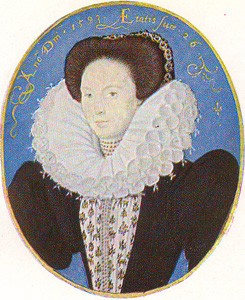
 anonymous. (1593). Elizabethan hairstyles 1500-1600. Available: http://trystancraft.com/costume/2011/07/15/elizabethan-hairstyles-1560-1600/. Last accessed 27/10/14.
The 1593 portrait of Emilia Bassano conveys the prominent heart shaped incorporated into the Elizabethan hairstyles which were simply created by applying rats to the hair to shape and create volume .
anonymous. (1593). Elizabethan hairstyles 1500-1600. Available: http://trystancraft.com/costume/2011/07/15/elizabethan-hairstyles-1560-1600/. Last accessed 27/10/14.
The 1593 portrait of Emilia Bassano conveys the prominent heart shaped incorporated into the Elizabethan hairstyles which were simply created by applying rats to the hair to shape and create volume .
 Jonas Akerland. (04/02/12). Beyoncé 02 ad. Available: reallifechic.com/2013/02/04/beyonce-o2-ad/. Last accessed 27/10/14.
The 2013 image of Beyoncé's royalty style for the 02 advert highlights some hair techniques used in the Elizabethan era. The frizzing technique which can be created by weaving section of hair through a geisha pin and heating the section up which will leave zig zag curls in the hair which can then be brushed out to create a frizzing effect which also creates a significant amount of volume is the most prominent Elizabethan technique I notice by analysing the image. There is also a possibility that rats were also shaped and secured into the hair to secure the volume in place and to create a prominent round hairstyle.
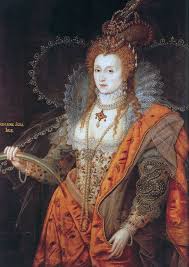
Isaac Oliver. (c.1600). The rainbow portrait . Available: http://www.andrewgrahamdixon.com/archive/readArticle/245. Last accessed 30/11/14.
By comparing the rainbow portrait of Queen Elizabeth to the contemporary image of Beyoncé's Elizabethan up do, it is recognisable that both images have similar elements. The hair in Rainbow portrait of Queen Elizabeth has also used the frizzing technique to curl the frizz the hair to create volume, however the loose curls seem to be brushed slightly in order to keep the zig zag curl effect. It is noticeable in the portrait the hair style overall is very rounded which is similar to Beyoncé's contemporary hairstyle.
The frizzing technique is definitely a technique which I would like to consider incorporating in to my final Elizabethan hairstyle.

anonymous. (2014). perfect hairstyles for prom in 2014. Available: http://www.beautyinfashions.com/perfect-hairstyles-prom-2014/prom-hairstyles-for-long-hair-2014/. Last accessed 08/10/14.
The 2014 fashion photograph highlights some hair techniques which were also used in their Elizabethan era. The Elizabethans were well known for having their hair plaited or in a bun. The oversized low bun in this image puts a modern twist on the Elizabethan era. The Elizabethans were also known for wearing a variety of headgear such as pillbox hats; affiets and coifs, in this image overlaying the bun is a caul which also
o highlights the Elizabethans hairstyle. The Elizabethans also were known for incorporating materials into their hairstyles such as ribbon and velvet, the wealthier Elizabethans tended to included more valuable pieces into the hairstyles, such as jewels and pearls. In the contemporary image it is noticeable that pearls having been incorporated into this style and have been attached to the caul.
anonymous. (1580). Elizabethan hairstyles. Available: http://trystancraft.com/costume/2011/07/15/elizabethan-hairstyles-1560-1600/. Last accessed 23/10/14.
The 1580 portrait of Queen Elizabeth highlights the similar techniques used in the modern fashion photograph. It is noticeable that Elizabeth has her hair pinned back of her face into a bun with a caul which is secured over it. It is noticeable that the caul securing the bun in the 1580 portrait has been designed from a lace material whereas in the contemporary image it looks like the coif has been designed from a netted material. The hairstyle in the portrait also looks like jewels and pearls have been incorporated into Queen Elizabeth's hair which highlights the similarities between the modern and Elizabethan hairstyle.
I really like the idea of incorporating a caul into an Elizabethan hairstyle it really ties the whole look together.